
By Dr. Nilsana Charkhande, PsyD, RCC, CCC, ACS — therapist and clinical supervisor with 15+ years treating trauma, anxiety, depression, and family concerns.
Do you often feel restless, agitated, or overwhelmed with worries and thoughts of what might go wrong? Anxiety can interfere with your ability to succeed at work or in school, sabotage family life, challenge romantic relationships, and make for difficult interpersonal interactions.
Key points
- Different people experience anxiety in different ways
- Anxiety tends to respond well to treatment
- You can learn to recognize the symptoms of anxiety
- Choose an effective treatment path for anxiety
In this article
Understanding and Treating Anxiety
Do you often feel nervous, uneasy, unmotivated, or struggle in your relationships? Do intrusive thoughts interrupt your day? Do you sometimes doubt yourself or worry about what others think of you? These may be signs of an anxiety disorder. The good news is that anxiety often responds well to treatment.
Anxiety is Common
Research shows that anxiety affects millions of people every year, and its prevalence has been increasing for some time. The challenges of recent years have made symptoms more frequent and more intense for many. Social isolation, changes in work routines, less time spent outdoors, and increased screen time all contribute to rising stress levels. Some people turn to alcohol or other unhealthy habits to cope, which can make anxiety worse.
Why Anxiety Can Linger
Anxiety is a natural human response to perceived threats, helping us react quickly in urgent situations. However, when stressful triggers persist or we do not respond effectively, our minds can become stuck in high-alert mode. Over time, this can lead to patterns of thinking and behaviour that keep anxiety levels elevated long after the original trigger has passed.
Types of Anxiety Disorders
Anxiety can take many forms, including:
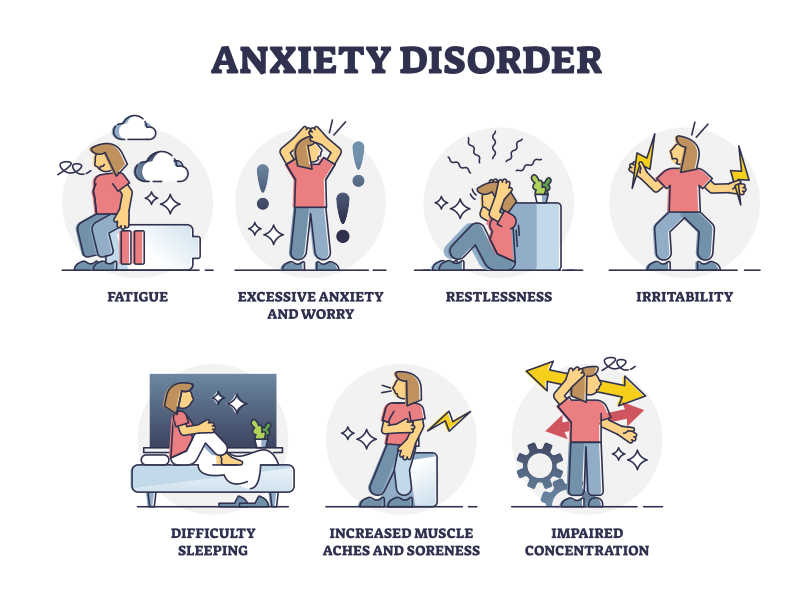
Generalized Anxiety Disorder (GAD): Ongoing feelings of worry or dread, often accompanied by restlessness, fatigue, difficulty sleeping, irritability, muscle tension, or stomach issues.
Social Anxiety Disorder: Intense fear or discomfort in social situations, sometimes making it difficult to speak up, meet new people, or even leave the house.
Panic Disorder: Sudden episodes of intense fear or discomfort, which may involve rapid heartbeat, shortness of breath, dizziness, or feeling out of control.
Phobias: Strong fears of specific situations or objects, such as flying, heights, or enclosed spaces, even when the actual danger is minimal.
Causes and Risk Factors
A combination of genetics, life experiences, and environment can influence the likelihood of developing an anxiety disorder. Family history, stressful events, and certain health conditions can all contribute. High caffeine intake, substance use, and certain medical issues such as thyroid disorders or heart arrhythmias can also increase risk.
How Anxiety Can Be Treated
Anxiety disorders often respond well to psychotherapy, especially when treatment is tailored to your unique needs. Effective approaches include:
Cognitive Behavioral Therapy (CBT): Helps you identify and change thought patterns and behaviours that fuel anxiety.
Exposure Therapy: A CBT-based method that gradually reduces fear by safely confronting anxiety triggers.
Acceptance and Commitment Therapy (ACT): Uses mindfulness and goal-setting to help you manage difficult thoughts and emotions while building a values-driven life.
In some cases, medication can be helpful alongside therapy, supporting mood stability, improving sleep, and increasing your ability to engage in healthy habits.
Taking the first step
Anxiety does not have to define your life. With the right support, you can feel calmer, more present, and more in control. At Canada Psychotherapy, Dr. Nilsana Charkhande works with individuals and families to address anxiety with compassion and evidence-based care.
If you are ready to begin your journey toward greater peace of mind, call (604) 500-3443 or complete the contact form on our website. Together, we can work toward a calmer, more fulfilling life.
More information
Anxiety Disorder. National Institute of Mental Health. https://www.nimh.nih.gov/health/statistics/any-anxiety-disorder
Henning, M., Subic-Wrana, C., Wiltink, J., & Beutel, M. (2020). Anxiety Disorders in Patients With Somatic Diseases. Psychosomatic Medicine.
Nelson, H., Cantor, A., Pappas, M., & Weeks, C. (2020). Screening for Anxiety in Adolescent and Adult Women. Annals of Internal Medicine.
What’s the difference between stress and anxiety? American Psychological Association. https://www.apa.org/topics/stress/anxiety-difference
By Dr. Nilsana Charkhande, PsyD, RCC, CCC, ACS.
Her clinical work focuses on trauma, PTSD, anxiety, depression, OCD, addiction, eating concerns, family relationships, and self-harm. Her training includes EMDR, CBT, DBT, hypnotherapy, art therapy, and Safe and Sound Protocol.