By Dr. Nilsana Charkhande, PsyD, RCC, CCC, ACS — therapist and clinical supervisor with 15+ years treating trauma, anxiety, depression, and family concerns.
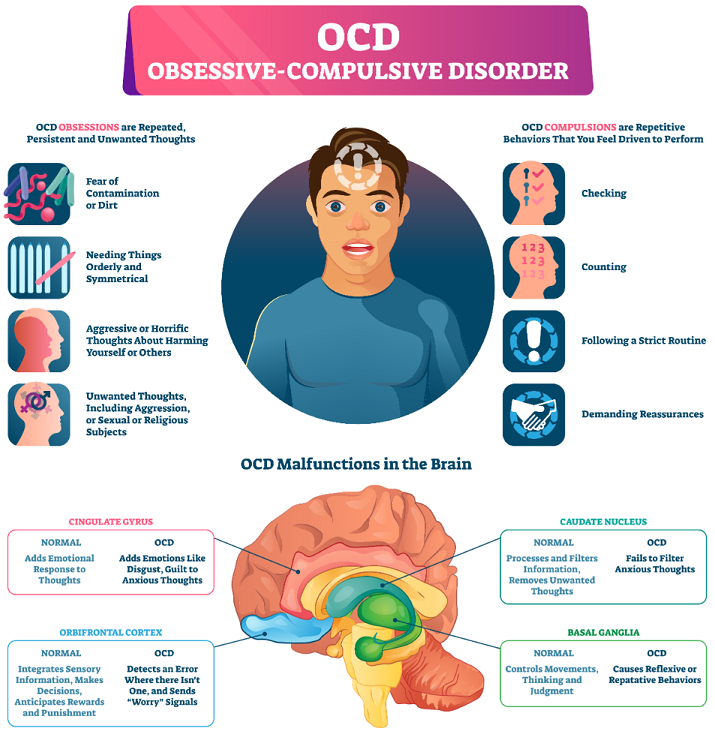
Obsessive Compulsive Disorder is the 4th most common mental illness, characterized by acute anxiety, obsessive or intrusive thoughts and compulsive behaviors.
Key points
- Obsessive Compulsive Disorder is a mental illness affecting approximately 2-3 million adults across the US
- OCD is different from generalized anxiety disorder (GAD), primarily featuring obsessive thoughts and compulsive behaviors
- OCD reduces your quality of life and your capacity to hold down a job and have meaningful relationships
- Obsessive Compulsive Disorder responds well to treatment, especially when using a combination of psychotherapy and medication
Quick navigation
Overview
Obsessive Compulsive Disorder is an anxiety-based condition marked by persistent intrusive thoughts that lead to repetitive behaviors you may feel unable to stop. These cycles often center on specific concerns such as worries about contamination, a strong drive for order, fears related to safety, or distressing unwanted thoughts. Over time, these patterns can interfere with daily life and create significant emotional strain.
Risk factors
While the exact cause of OCD is still being studied, several factors are known to increase the likelihood of its development. A family history of OCD raises your risk, particularly when a close relative was diagnosed in childhood or adolescence. Certain environmental experiences can also contribute, including significant early trauma or the onset of OCD symptoms in childhood following a streptococcal infection, sometimes referred to as PANDAS.
OCD symptoms involve intense anxiety, intrusive thoughts, and ritualized behaviors. The condition is also more common in individuals who experience neurological changes that affect how the brain processes information. People living with epilepsy, Parkinson’s Disease, or Tourette’s Syndrome may face a higher risk, although researchers continue to explore how these conditions relate to OCD.

Diagnosis
A diagnosis of OCD is made by a qualified healthcare professional after a detailed psychological assessment. This evaluation looks at the nature of your intrusive thoughts and behaviors, the impact they have on your life, and whether they may be linked to another mental or physical health concern. Your clinician may also recommend specific supports or refer you to additional services based on your symptoms.
Treatment
Effective care for OCD often includes psychotherapy, medication, or a combination of both. Therapy offers a structured space to explore your thoughts and behaviors, build new skills, and regain a sense of control. Exposure-based approaches can help you gradually confront fears in a safe and supported way, reducing their influence over time. Other therapeutic approaches may also be recommended depending on your needs.
Working with a professional who has experience treating OCD is an important part of the recovery process. With proper treatment, many people begin noticing meaningful improvements in their symptoms and overall well-being. Without support, however, symptoms often intensify.
Related mental health challenges
OCD can appear alongside other conditions, including anxiety, depression, and some neurological or physical health concerns. Your clinician will consider whether OCD is your primary diagnosis or part of a broader pattern and will tailor recommendations accordingly. They may also determine whether your symptoms fall within a habit-related spectrum or share features with psychotic-spectrum conditions, which helps guide the most effective treatment plan.
Begin your family's healing journey
Reaching out for support can feel like a big step, yet it is one that can bring your family closer to balance and connection. Dr. Nilsana Charkhande offers thoughtful guidance and evidence-informed care to help your family move toward a more peaceful and fulfilling life. To get started, please call +1 (604) 500-3443 or complete the contact form. We look forward to supporting you.
References and further reading
Başkaya, E., Özgüç, S., & Tanrıverdi, D. (2021). Examination of the Effectiveness of Mindfulness-Based Cognitive Therapy on Patients with Obsessive-Compulsive Disorder: Systematic Review and Meta-Analysis. Issues in Mental Health Nursing.
Obsessive-Compulsive Disorder. National Institute of Mental Health. https://www.nimh.nih.gov/health/topics/obsessive-compulsive-disorder-ocd
Szechtman, H., Harvey, B., Woody, E., & Hoffman, K. (2020). The Psychopharmacology of Obsessive-Compulsive Disorder: A Preclinical Roadmap. Pharmacological Reviews.
Tjelle, K., Opstad, H., Solem, S., Launes, G., Hansen, B., Kvale, G., & Hagen, K. (2021). Treatment Adherence as Predictor of Outcome in Concentrated Exposure Treatment for Obsessive-Compulsive Disorder. Frontiers in Psychiatry.
By Dr. Nilsana Charkhande, PsyD, RCC, CCC, ACS.
Her clinical work focuses on trauma, PTSD, anxiety, depression, OCD, addiction, eating concerns, family relationships, and self-harm. Her training includes EMDR, CBT, DBT, hypnotherapy, art therapy, and Safe and Sound Protocol.